Lake Toba
The world's largest volcanic lake — the caldera of a supervolcano eruption, now impossibly calm
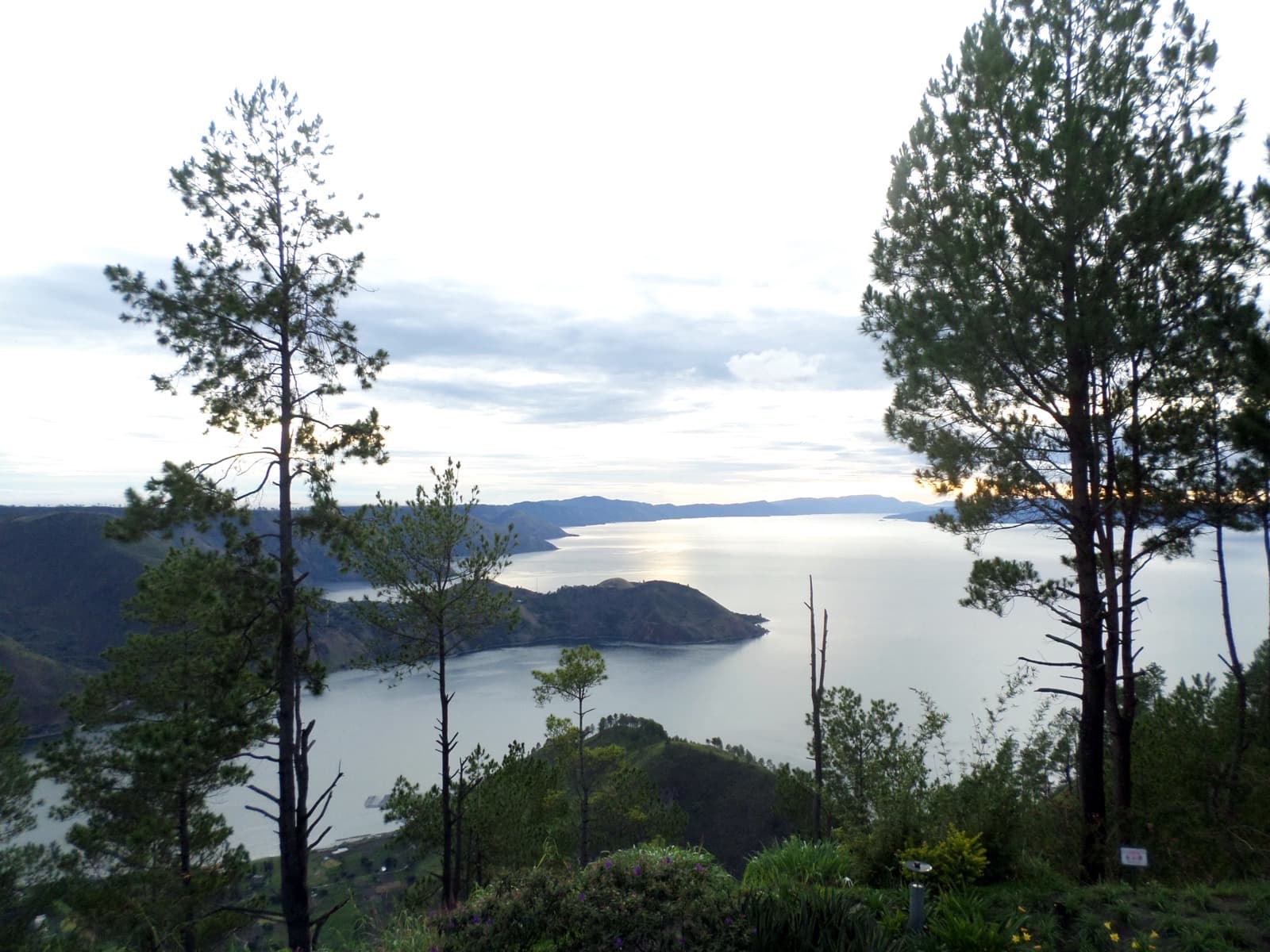
Formed by a supervolcanic eruption roughly 74,000 years ago — one of the largest known volcanic events in Earth's history — Lake Toba is now a vast, placid caldera lake ringed by highlands, with Samosir Island (itself larger than Singapore) rising from its center.
Quick facts
Samosir Island
Samosir sits inside the lake and is the cultural heart of the region, home to the Batak Toba people — traditional saddle-roofed houses, stone burial sites, and villages that still center on Batak customs make it worth a full day or overnight rather than a quick boat pass-by.
Getting on the water
Ferries connect the mainland towns (Parapat is the main hub) to Samosir throughout the day, and hiring a boat for lake-hopping or sunset viewing is straightforward and inexpensive once you're in the area.
The scale of it
It's easy to underestimate Toba until you're actually there — roughly 100km long and 30km wide, deep enough that it took the world's biggest volcanic eruption to carve it, and calm enough most days that it barely looks like it sits atop a still-active geological system.
Practical tips
- —Base yourself on Samosir Island itself rather than just day-tripping from the mainland — the pace and access to Batak villages is better from there.
- —Tuk Tuk, on Samosir, is the main traveler hub with the widest range of guesthouses and restaurants.
- —The lake's altitude (about 900m) means genuinely cooler evenings than lowland Sumatra — bring a light layer.
- —Traditional Batak dance performances are staged periodically in Samosir villages — worth checking a schedule if cultural context matters to your trip.