Bali's Temples
Thousands of active temples — a handful are essential, most are living community sites
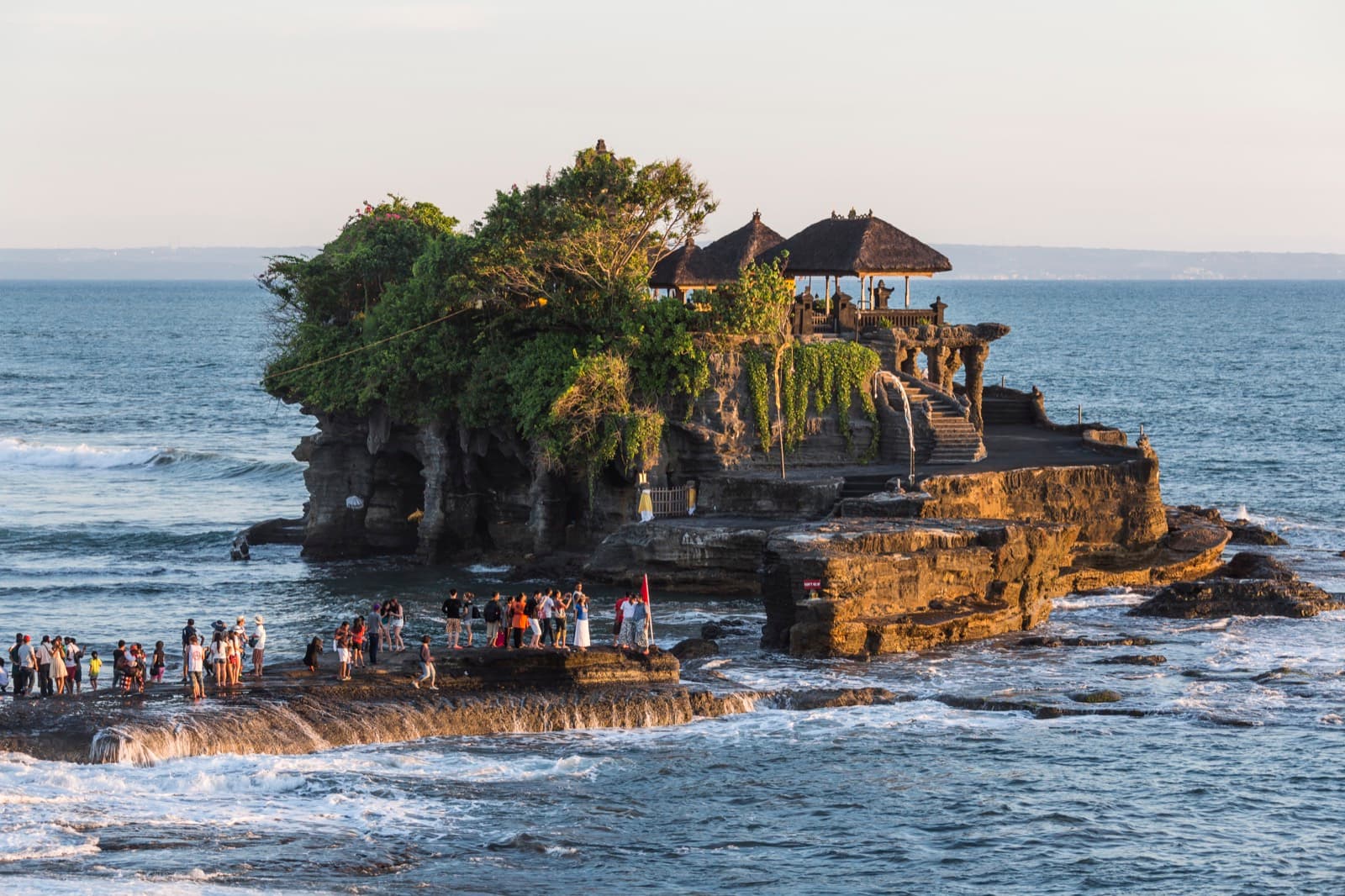
Bali has an estimated 20,000+ temples (pura), most of them small community shrines that see no tourists at all. A handful are architecturally or scenically significant enough to be genuine must-sees — and all of them are active places of worship, not museums, which comes with dress-code expectations.
Quick facts
The essential few
Tanah Lot sits on a rock formation surrounded by sea at high tide — best at sunset, and very crowded then. Uluwatu Temple perches on a 70-meter cliff with an evening kecak fire dance. Besakih, the 'Mother Temple,' is Bali's largest and holiest complex, on the slopes of Mount Agung.
Dress code
A sarong and sash (usually provided or rentable at the entrance) are required at every temple, covering the legs, regardless of gender. Menstruating women are traditionally asked not to enter — a real local belief, not a tourist gimmick, worth respecting.
Etiquette
Don't climb on shrine structures for photos, don't point your feet at offerings or altars, and keep voices down inside inner courtyards. Many temples restrict tourist access to the outer courtyard only, reserving the inner sanctum for worshippers.
Practical tips
- —Visit Tanah Lot at sunset but arrive 90 minutes early to beat the tour bus crowds.
- —Besakih has a reputation for aggressive unofficial 'guides' — book a licensed guide in advance or go with a driver who knows the etiquette.
- —Small offerings (canang sari) are placed on the ground everywhere in Bali — watch your step, and never kick or step directly on one.
- —Early morning (before 9am) is consistently the quietest time at any popular temple.