Ijen Crater
Electric-blue flames at 2am, a turquoise acid lake at sunrise, and a genuinely tough hike
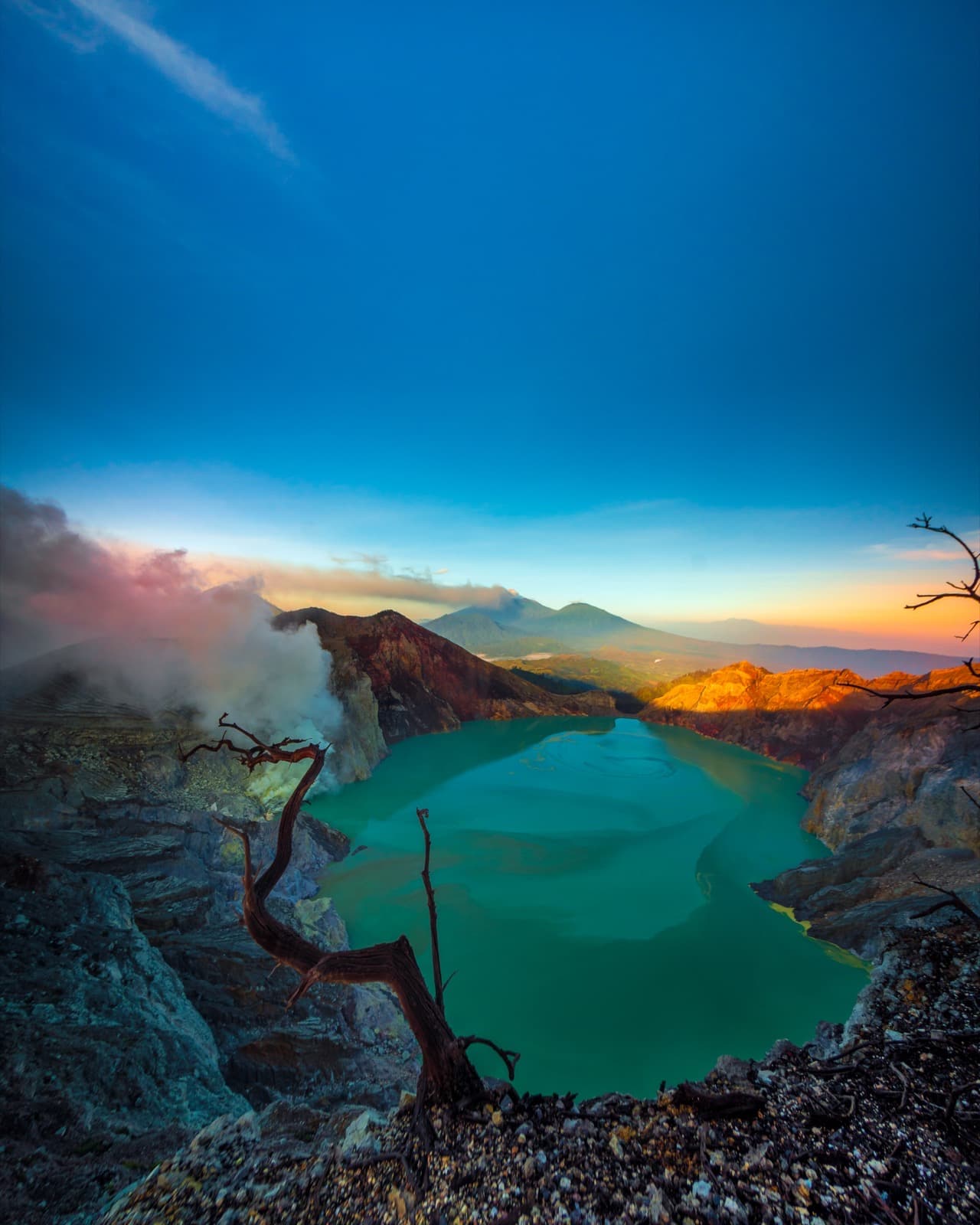
Kawah Ijen, at Java's eastern tip, is one of only two places on Earth where you can see 'blue fire' — sulfuric gas igniting on contact with air, visible only in full darkness. It's paired with the world's largest highly acidic crater lake, a striking turquoise by daylight.
Quick facts
The night hike
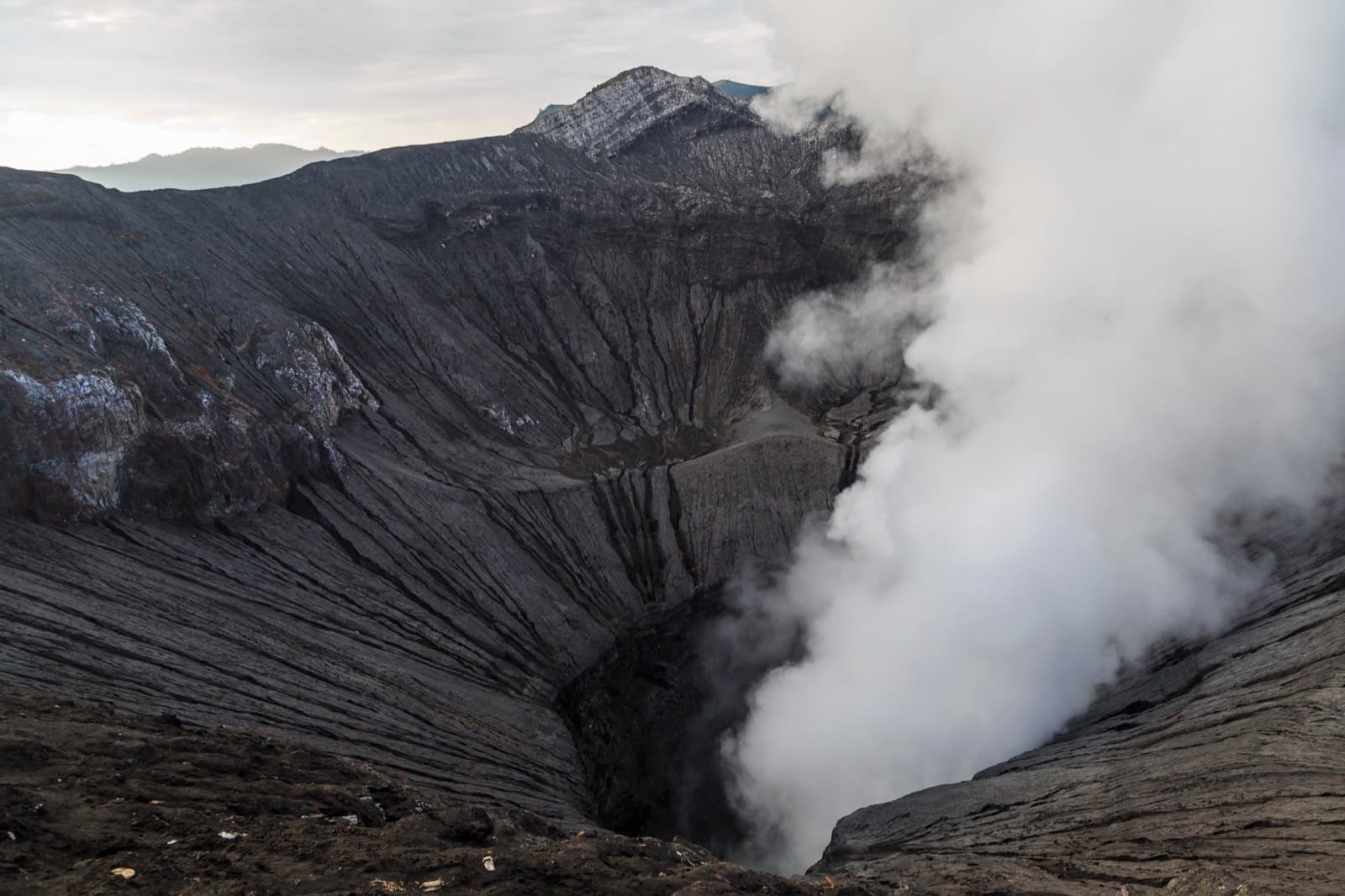
To see the blue fire you have to hike up and down into the crater in complete darkness, starting around 1–2am — a genuinely strenuous trek (roughly 3km up, then a steep, sulfur-fume-heavy descent into the crater itself) that's tougher than Bromo or Batur. A gas mask is essential, not optional, near the flames.
Sulfur miners
Ijen is still an active sulfur mine — you'll pass local miners carrying 70–90kg loads of raw sulfur up the crater trail by hand, a genuinely difficult job that predates and continues alongside the tourism. Tipping miners who let you photograph them (with permission) is standard etiquette.
Sunrise over the lake
After the blue fire fades with daylight, the crater lake itself becomes the draw — an intensely turquoise, highly acidic body of water inside the caldera walls, with the whole scene visible in daylight for photos on the way back down.
Practical tips
- —A gas mask (rentable at the base) is non-negotiable near the crater floor — sulfuric gas here is genuinely dangerous, not just unpleasant.
- —This is a harder hike than Bromo or Batur — reasonable fitness required, sturdy shoes essential, and the descent into the crater is steep and slippery.
- —Banyuwangi or Bondowoso are the usual bases — both are a long way from Bali or Yogyakarta, so this is typically its own trip, not a bolt-on.
- —Go with a licensed guide — the crater trail has real hazards (toxic gas pockets, unstable footing) that aren't obvious to first-timers.