Tongkonan Villages
Boat-shaped ancestral houses with roofs that curve skyward — architecture that's still lived in, not preserved as a museum
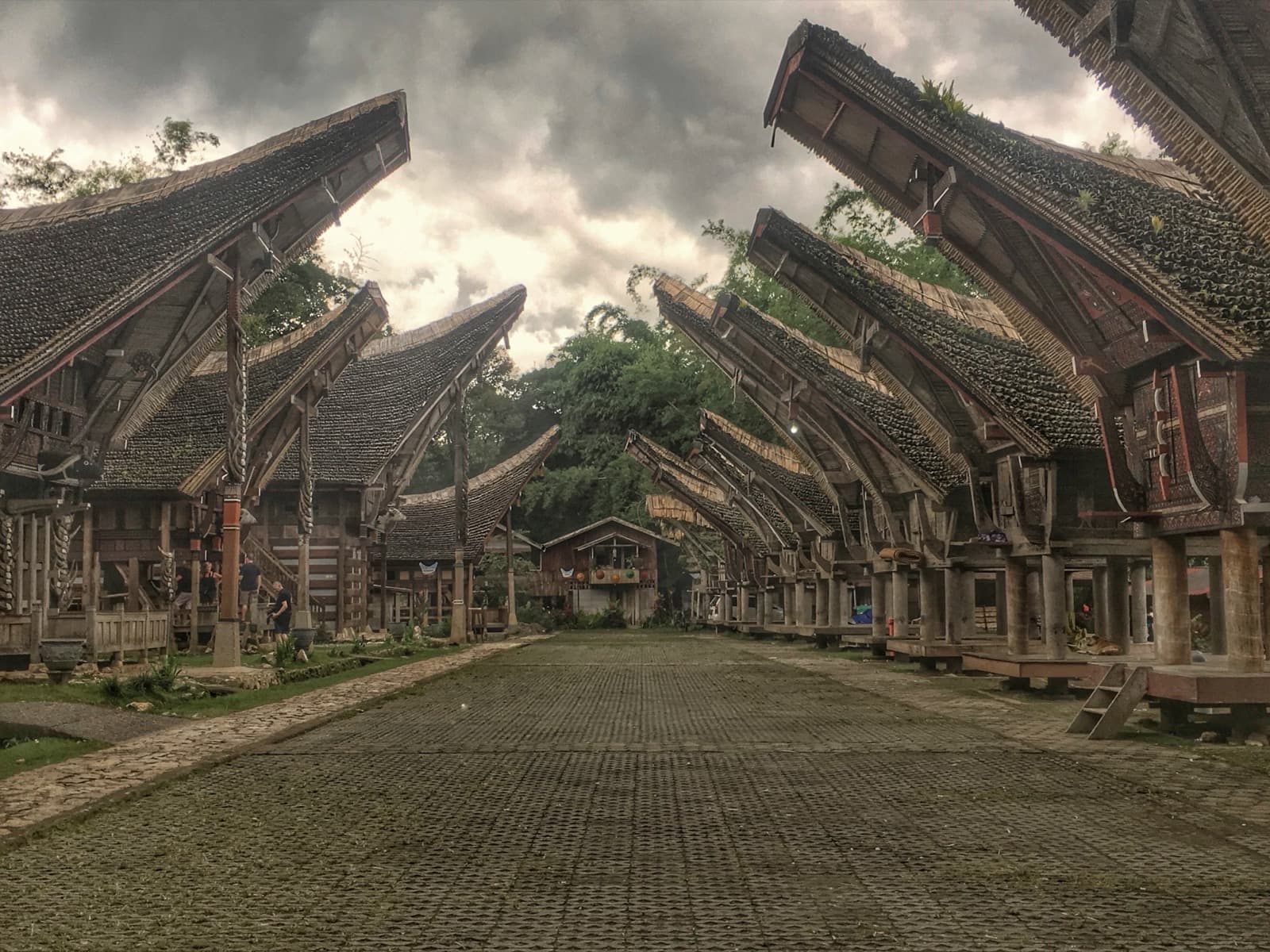
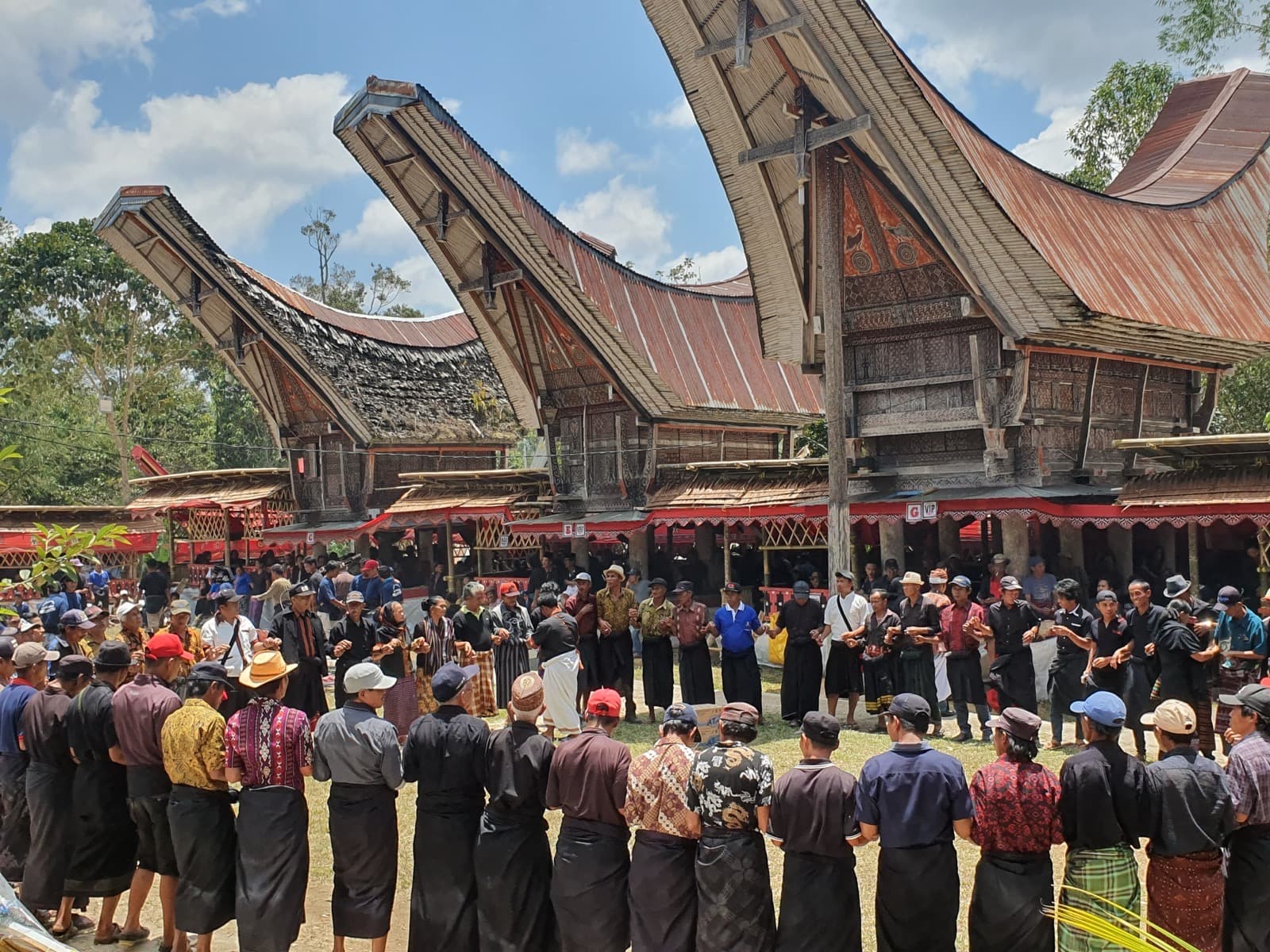
Tongkonan — traditional Torajan houses with distinctive saddle-shaped roofs that sweep upward at both ends, said to represent buffalo horns or a boat — remain the center of Torajan family and clan identity, standing in rows facing rice barns of matching design across village courtyards still in active daily use.
Quick facts
Kete Kesu
One of the most-visited traditional villages, combining well-preserved tongkonan architecture with centuries-old hanging graves and cave burial sites on the cliffs behind the village — a good single stop for both architecture and Torajan burial customs.
The architecture itself
Roofs traditionally made of layered bamboo (now often replaced with corrugant metal for practicality) curve dramatically upward, and the fronts of older tongkonan are carved with buffalo horns and geometric motifs — buffalo horns displayed on the facade signal the family's wealth and the number of buffalo sacrificed at past funerals.
Living tradition vs display
Many tongkonan villages are still home to real Torajan families, not preserved solely for visitors — walking through respectfully, asking before photographing people directly, and supporting the village (small entrance donations, buying local crafts) keeps the visit appropriate rather than extractive.
Practical tips
- —Kete Kesu combines tongkonan architecture with burial sites in one stop if time is limited.
- —Buffalo horns on a tongkonan's facade aren't decorative — they're a genuine status marker tied to funeral history, worth asking a guide to explain.
- —These are lived-in villages — be as respectful here as you would be visiting anyone's home.
- —Rantepao is the main town base for exploring the surrounding tongkonan villages by day trip.