Chiang Mai
Northern Thailand's cultural capital — old-city temples, mountain treks and a long-running digital nomad scene
Cooler, slower and greener than Bangkok, Chiang Mai pairs a genuinely old walled city (300+ temples in the wider metro area) with easy access to mountain trekking, elephant sanctuaries and hill-tribe villages — and has one of Southeast Asia's longest-established digital nomad communities, with the coworking scene to match.
Quick facts
The Old City
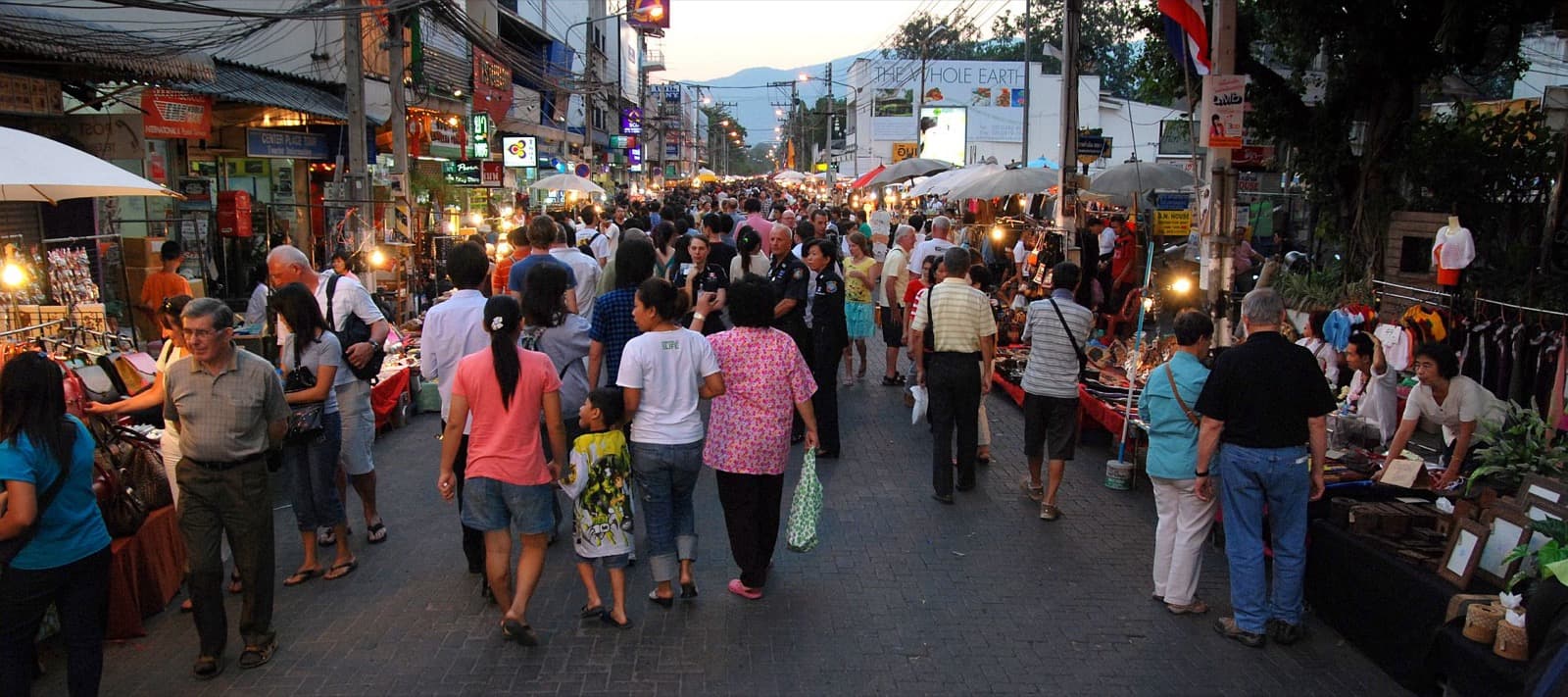
The moat-and-wall-bounded Old City packs in dozens of temples within walking distance of each other — Wat Phra Singh and Wat Chedi Luang are the standouts. The Sunday Walking Street market that takes over the Old City's main road is one of the best in the country for handicrafts and food.
Elephants — choose the sanctuary carefully
Chiang Mai is the main gateway for elephant sanctuary visits, but standards vary enormously — a genuine no-riding, observation-and-bathing ethical sanctuary is a very different experience from an operation still built around rides and performances. Research the specific place before booking, not just the general activity.
Digital nomad scene
Chiang Mai has hosted a large, semi-permanent digital nomad and long-stay expat community for over a decade, with coworking spaces, nomad-friendly cafes and a cost of living well below Bangkok's. Nimmanhaemin ('Nimman') is the neighborhood most associated with this scene.
Practical tips
- —Visit temples early morning to avoid both heat and tour groups — Wat Phra Singh gets busy by mid-morning.
- —Research an elephant sanctuary's actual practices (no riding, no performances) before booking — marketing photos don't reliably tell you which kind of operation it is.
- —Songkran (mid-April, Thai New Year) turns the whole city into a multi-day water fight — brilliant if that's what you're after, worth avoiding if you're not.
- —Burning season (roughly February–April) brings genuinely poor air quality some years — check current air quality index if you have respiratory sensitivities.