Everest Region Trekking
You don't need to summit Everest to walk through some of the most dramatic mountain scenery on Earth
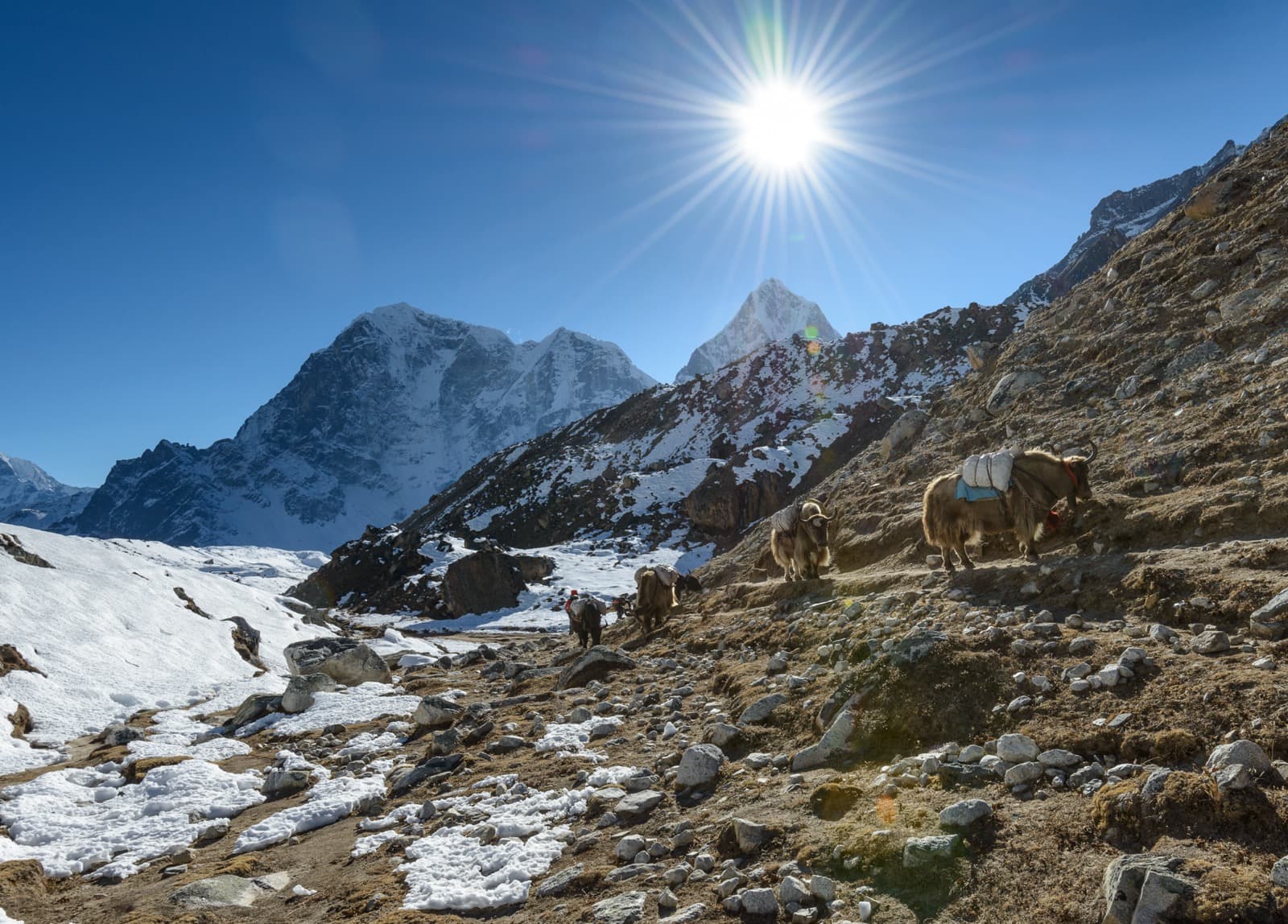
Everest Base Camp trek — roughly 12–14 days round trip from Lukla — is the classic route, but it's not the only option: shorter treks to Everest View Hotel or Namche Bazaar give a real taste of the region in far less time, and none of them require technical climbing skill, just genuine fitness and altitude patience.
Quick facts
The classic Base Camp route
Most treks fly into Lukla (a short, weather-dependent flight from Kathmandu) and follow the Dudh Kosi valley up through Namche Bazaar, Tengboche and Dingboche before reaching Everest Base Camp itself at around 5,364m. Kala Patthar, a nearby viewpoint, is where most trekkers actually get their best Everest summit photo — Base Camp itself doesn't have a clean view of the peak.
Altitude is the real challenge
This isn't a technically hard trek — it's a long walk on established trails — but altitude sickness is a genuine risk above 3,000m, which is most of the route. Proper acclimatization days (built into any reputable itinerary) aren't optional extras; skipping them is the single most common reason treks get cut short.
Shorter alternatives
If two weeks isn't realistic, treks to Namche Bazaar and the Everest View Hotel (around 7–8 days round trip) still deliver genuine Himalayan scenery and a real sense of Sherpa mountain culture, without the full commitment of reaching Base Camp itself.
Practical tips
- —Book a licensed guide/porter through a reputable trekking agency — solo trekking in restricted areas isn't permitted, and a guide genuinely helps with pacing and altitude decisions.
- —Build in acclimatization days rather than rushing — altitude sickness doesn't care how fit you are at sea level.
- —Lukla flights are notoriously weather-dependent — build a buffer day or two into your schedule on both ends of the trip.
- —Trekking permits (TIMS card and Sagarmatha National Park entry) are required — your agency typically arranges these.