Marapu Villages
Animist villages with towering peaked roofs and megalithic tombs, still practicing a pre-Hindu, pre-Islamic belief system
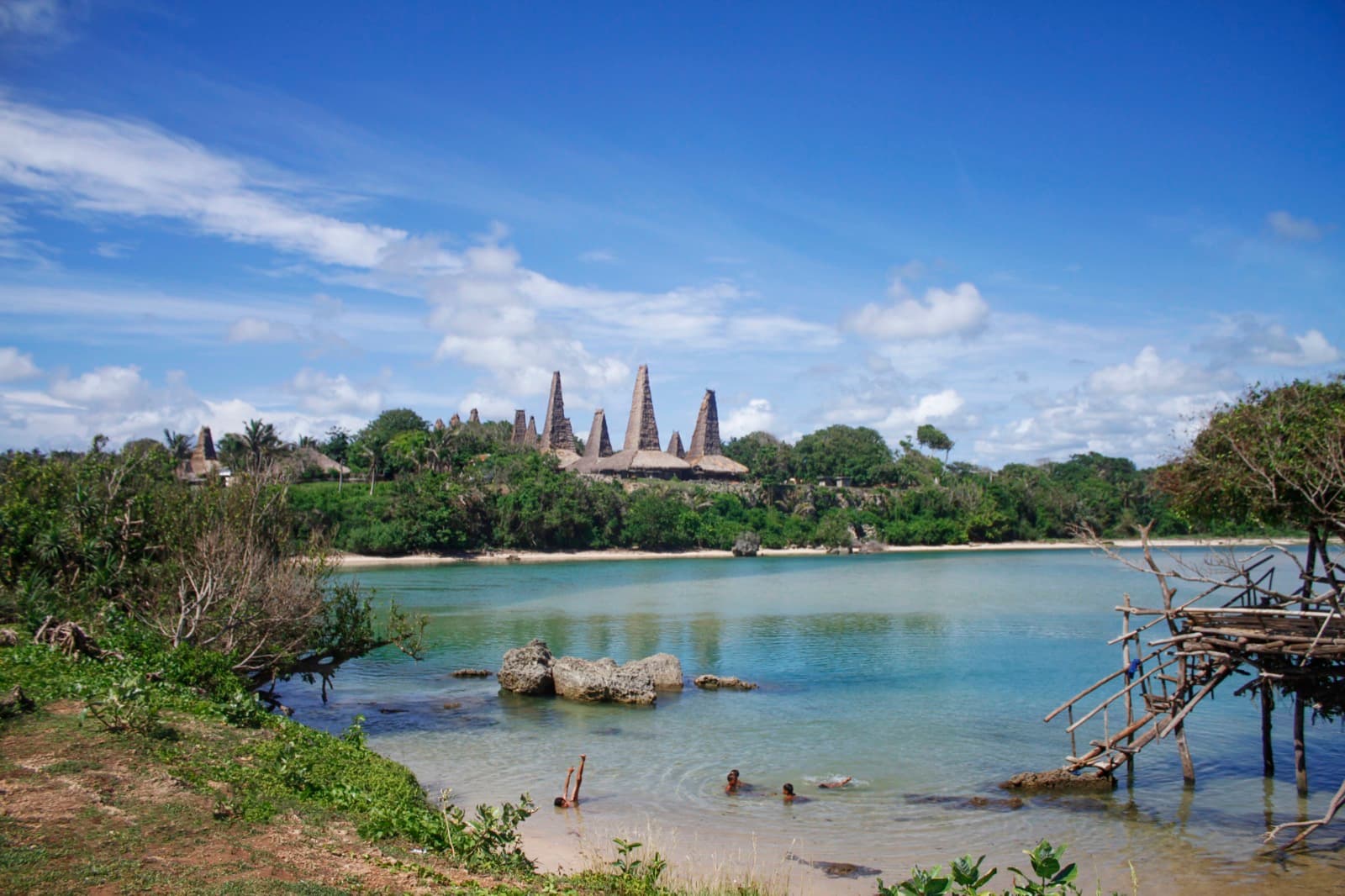
Marapu — Sumba's indigenous animist religion, predating both Hinduism and Islam's arrival in Indonesia — remains genuinely practiced in villages across the island, visible in distinctive high-peaked thatched roofs believed to house ancestral spirits and megalithic stone tombs built directly into village squares.
Quick facts
Ratenggaro and Praijing
Ratenggaro, on the southwest coast, is known for its unusually tall peaked roofs set dramatically near the beach; Praijing, in the western highlands, offers a similarly striking hilltop village with panoramic views — both are among the most visited and photogenic Marapu villages, though many smaller, equally authentic villages exist across the island.
Megalithic tombs
Large stone tombs, some weighing tons and requiring the whole village's cooperation (traditionally hauled by hand) to place, sit directly within village squares rather than a separate cemetery — a visible, everyday reminder of ancestor reverence central to Marapu belief.
Visiting respectfully
These are living communities practicing a real religion, not open-air museums — a small entrance donation is standard, ask before photographing people or entering homes, and a local guide can explain customs and symbolism that aren't obvious to an outside visitor.
Practical tips
- —Ratenggaro and Praijing are the most accessible starting points, but ask locally about smaller villages if you want a quieter, less-visited experience.
- —A local guide adds real context to the megalithic tombs and roof symbolism that's easy to miss without explanation.
- —Bring a small entrance donation — standard practice, not a formal ticket system.
- —Dress modestly and behave as you would visiting any active place of worship — Marapu is a genuinely practiced religion, not folklore.