Istanbul
The only major city genuinely split between two continents — and the layered history to match
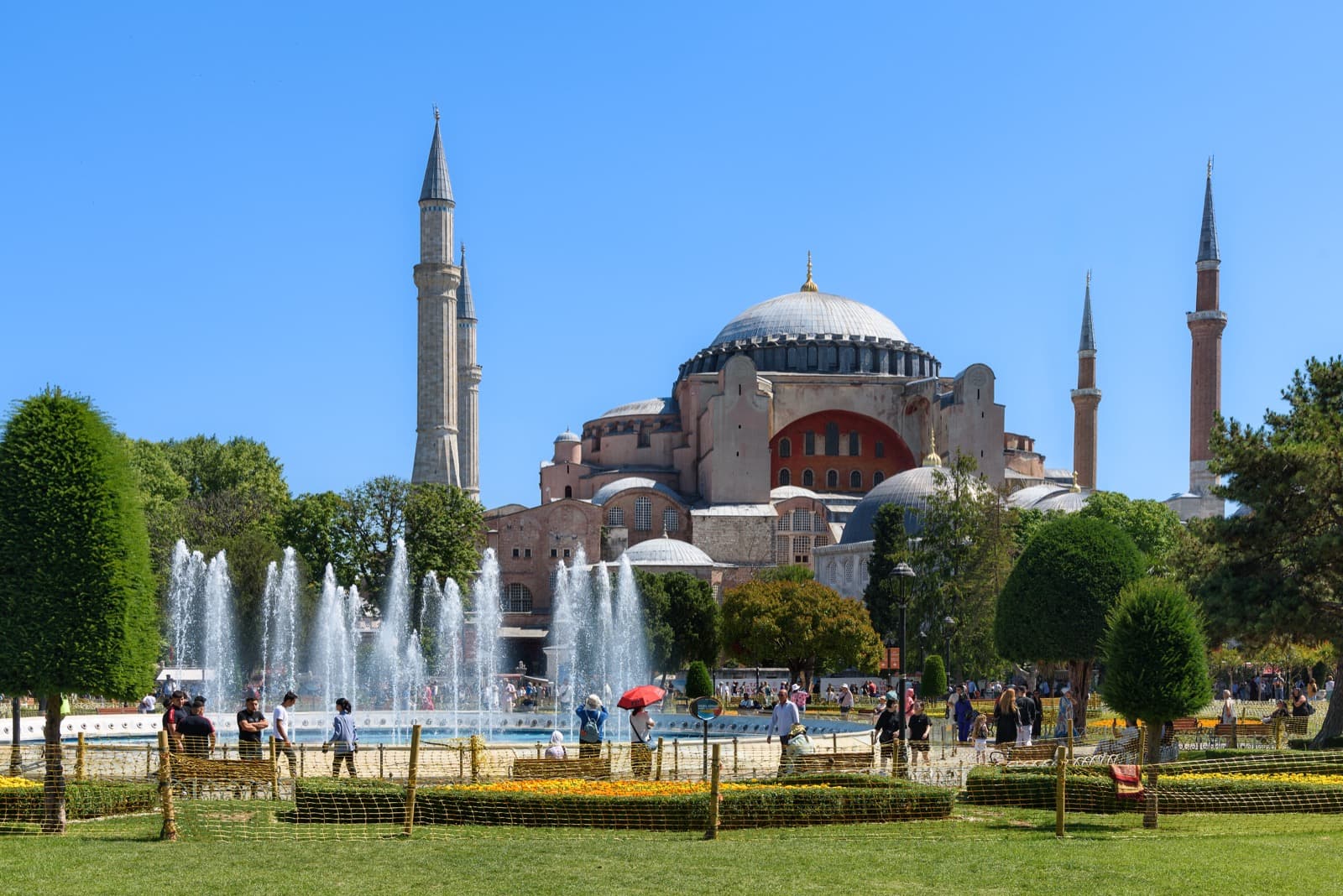
Istanbul's old city (Sultanahmet) packs Byzantine and Ottoman landmarks within walking distance of each other, while the Bosphorus itself — the strait separating Europe from Asia — is as much a part of the experience as any single monument.
Quick facts
Sultanahmet's landmarks
Hagia Sophia (a Byzantine cathedral turned Ottoman mosque turned museum turned mosque again) and the Blue Mosque sit facing each other across a small park — genuinely one of the most concentrated displays of religious architecture anywhere. The Topkapi Palace, former residence of Ottoman sultans, and the underground Basilica Cistern round out the core sights, all within a short walk.
The Grand Bazaar and beyond
The Grand Bazaar — one of the world's oldest and largest covered markets, with thousands of shops — is worth a visit for the atmosphere as much as any purchase. The Spice Bazaar nearby is smaller and more focused, genuinely good for edible souvenirs.
The Bosphorus
A ferry crossing between the European and Asian sides is cheap, quick, and gives a genuinely different perspective on the city than any land-based viewpoint — a longer Bosphorus cruise, past waterfront palaces and fortresses, is a worthwhile half-day if time allows.
Practical tips
- —Visit Hagia Sophia and the Blue Mosque early morning to avoid both the worst crowds and the midday heat in summer.
- —Dress modestly for mosque visits — covered shoulders and knees for everyone, a headscarf for women, available to borrow at most major mosques if needed.
- —The Bosphorus ferry between Eminönü and the Asian side is a genuinely good budget alternative to a paid cruise — same water, a fraction of the cost.
- —Istanbul is large — don't try to combine the old city (Sultanahmet) with the modern side (Beyoğlu/Taksim) in a single rushed day; give each real time.