Mount Rinjani Trek
Indonesia's second-highest volcano — a 2–3 day trek to a crater lake and a summit that earns it
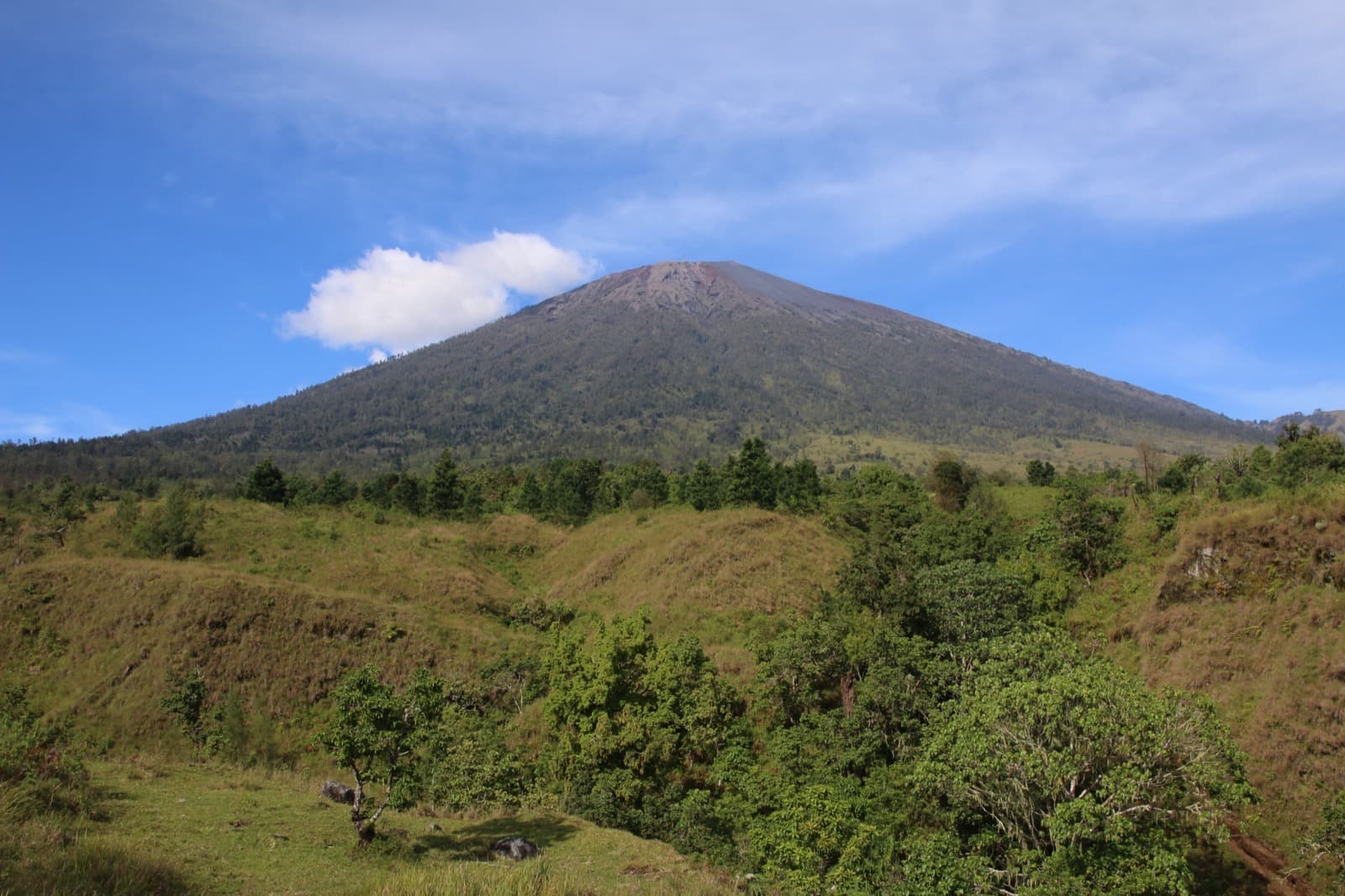
At 3,726m, Rinjani is a serious multi-day trek, not a sunrise day trip — but the reward is Segara Anak, a vivid blue-green crater lake with its own smaller active volcano (Gunung Baru Jari) rising from it, plus hot springs on the crater floor to soak sore legs in.
Quick facts
Route options
The classic route runs 2–3 days: up via Sembalun (the gentler, more scenic approach) to the crater rim campsite, down into the caldera to camp by Segara Anak lake and the hot springs, then out via the steeper Senaru trail — or the reverse. A separate, harder push to the actual summit is usually a pre-dawn add-on from the rim camp.
What a trek involves
This is genuinely demanding: volcanic scree on the summit push, long uphill stretches with a pack, and cold nights at altitude. Porters and guides (mandatory, arranged through licensed trekking operators) carry tents, food and cooking gear, but you're still hiking 6–8+ hours on the longer days.
Segara Anak & hot springs
The crater lake itself is the emotional payoff even if you skip the summit — a genuinely huge caldera lake you descend into and camp beside, with natural hot springs a short walk from the main campsite that most trekkers rate as the best part of the whole trip.
Practical tips
- —Book through a licensed operator with proper permits — solo/unguided trekking on Rinjani is not permitted and the trail conditions genuinely require a guide.
- —The trek is only open outside the wet season (roughly April–December) — it closes entirely during heavy rains for safety.
- —Bring proper layers — nights at the crater rim campsite get cold enough for a real winter jacket, unusual for a country this close to the equator.
- —Book at least a few days ahead in peak season (July–September) — permit slots and porter capacity are limited.