Sasak Traditional Villages
Lombok's indigenous villages, still lived in, not staged for tourists
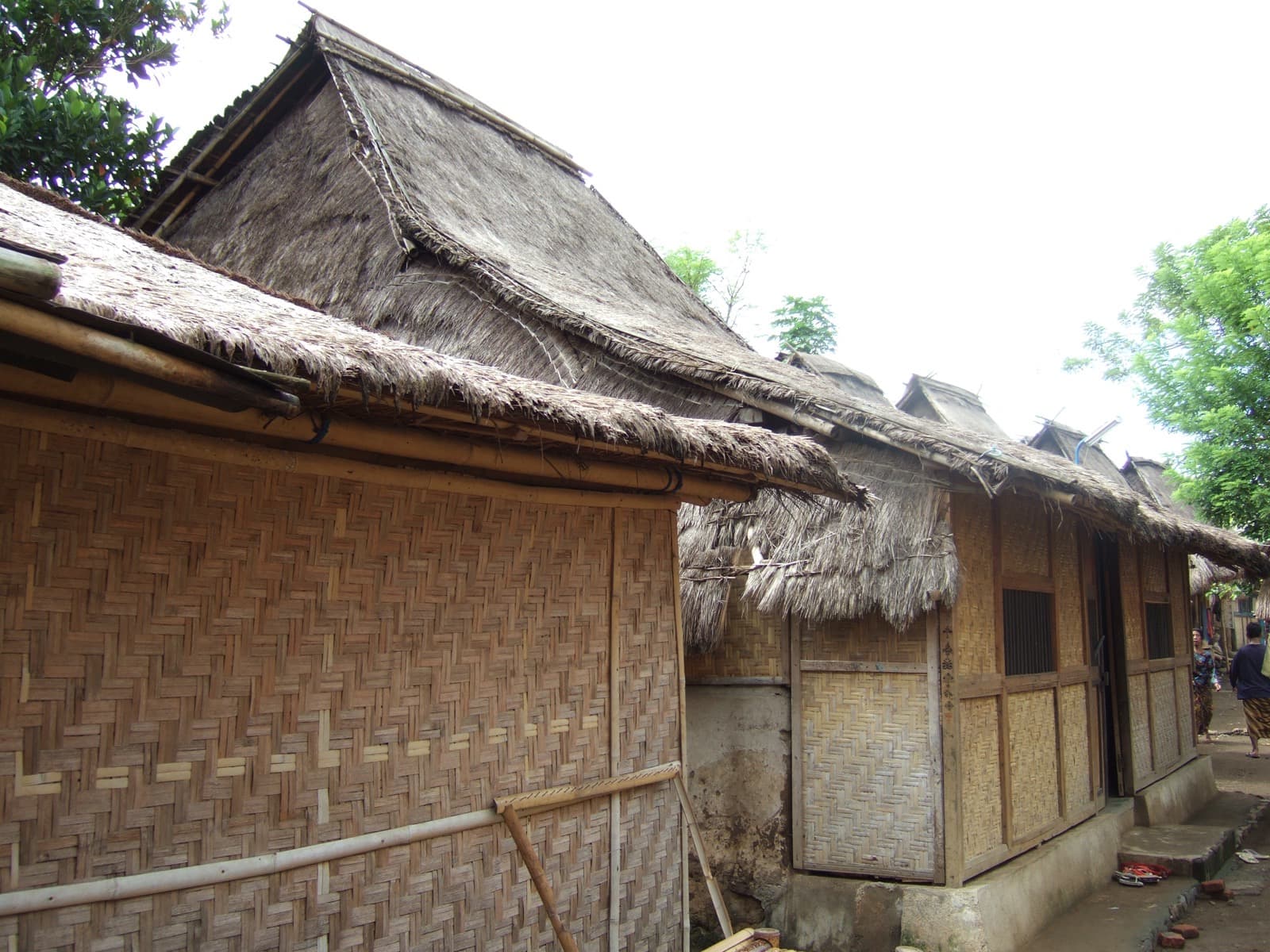
The Sasak are Lombok's indigenous ethnic majority, and villages like Sade and Ende preserve traditional bamboo-and-thatch houses with distinctive buffalo-dung-and-ash floors and elevated rice barns — genuinely still lived in, with residents who make and sell ikat weaving alongside daily life.
Quick facts
Sade Village
The most-visited Sasak village, easily reached on the main road between Praya and Kuta Lombok. Houses are built without nails, using bamboo lashed together, and the distinctive floor treatment (a mix of clay, buffalo dung and ash, re-applied periodically) is a genuine functional tradition, not a display piece.
Weaving & rice barns
Ikat weaving is a major part of Sasak village economy — you can watch the backstrap-loom weaving process and buy directly from the weavers. The elevated lumbung rice barns, raised on wooden legs with disc-shaped rat guards, are architecturally distinctive and found throughout the village.
Etiquette
These are lived-in homes, not a museum — a small entrance donation is standard, ask before photographing people directly, and a local guide (often arranged on arrival) adds real context you'd otherwise miss about the Sasak animist-Islamic Wetu Telu belief system still practiced by some residents.
Practical tips
- —Sade is easy to combine with a Kuta Lombok day trip — it's directly on the main road.
- —Buying a piece of ikat weaving directly from a village weaver supports the community more directly than a shop purchase elsewhere.
- —A small guide tip/donation is appropriate and expected — this isn't a paid-ticket attraction in the usual sense.
- —Dress modestly — this is a conservative, still-inhabited community, not a resort area.