The Buddhist Pilgrimage Circuit: Bodh Gaya, Sarnath, Kushinagar
Three of Buddhism's four holiest sites, all in northern India, marking enlightenment, the first sermon and the Buddha's death
Buddhist tradition marks four events as the pillars of the Buddha's life — birth (Lumbini, in Nepal — see our Nepal guide), enlightenment, the first sermon, and death — and three of those four happened in what's now northern India: Bodh Gaya, Sarnath and Kushinagar. Together with Lumbini, they form what's usually called the Buddhist Circuit, and pilgrims from Sri Lanka, Thailand, Myanmar, Japan, Korea and elsewhere travel here specifically for it, alongside a much smaller number of general travelers drawn by the history and the monasteries themselves.
Quick facts
Bodh Gaya — the enlightenment
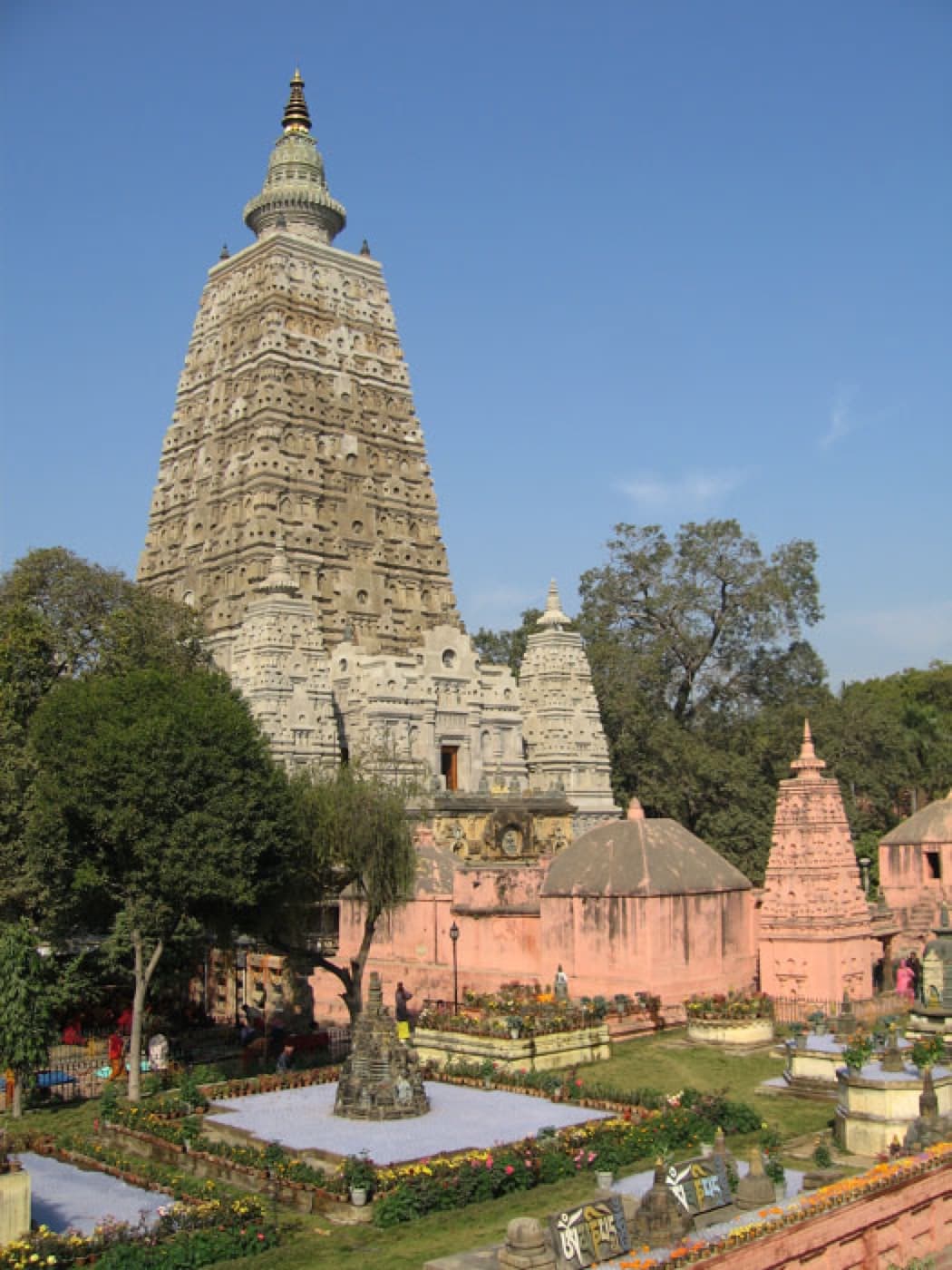
The Mahabodhi Temple Complex, a UNESCO World Heritage Site, marks the spot where Siddhartha Gautama attained enlightenment under a Bodhi tree — the tree standing there today is a direct descendant, grown from a cutting of the original. It's the most visited and most atmospheric of the three sites, with monasteries built by Thailand, Japan, Bhutan, Tibet, Vietnam and other Buddhist countries clustered around the main temple, each in its own national style. Early morning or evening, when monks and pilgrims circumambulate the temple and meditate under the tree, is when the site feels most alive rather than like a monument.
Sarnath — the first sermon
About 10km from Varanasi (effectively a suburb of it, and easy to combine with a Varanasi trip), Sarnath's Deer Park is where the Buddha gave his first sermon after enlightenment, setting the 'Wheel of Dharma' in motion. The Dhamek Stupa marks the spot, and the site's Ashoka Pillar originally bore the four-lion capital that India later adopted as its national emblem — the original capital is preserved in Sarnath's archaeological museum, worth the visit on its own.
Kushinagar — the parinirvana
The site of the Buddha's death (parinirvana), Kushinagar is quieter and less visited than Bodh Gaya or Sarnath, centered on the Mahaparinirvana Temple and its large reclining Buddha statue. Kushinagar International Airport opened in 2021 specifically to serve Buddhist pilgrims, but scheduled international service has been inconsistent — as of 2026, international access is mostly via seasonal charter flights (from Sri Lanka, Thailand, Myanmar) during the October–February pilgrimage season, with the more reliable route for most visitors being by road from Gorakhpur or Varanasi.
Practical tips
- —The three sites aren't close together — Varanasi (for Sarnath), Gaya (for Bodh Gaya) and Kushinagar are each several hours apart by road or a short flight — so budget a week or more if covering all three plus Varanasi itself, rather than trying to do it as a quick add-on.
- —Gaya has its own airport (Gaya Airport, mainly serving pilgrim charter traffic) close to Bodh Gaya; Varanasi's airport is the more reliable year-round option and puts Sarnath within a short drive.
- —October–March is by far the most comfortable window — North Indian summers (April–June) get extremely hot, and the sites themselves have limited shade.
- —Dress modestly and remove shoes before entering temple complexes, same as anywhere else in India — this is treated seriously at all three sites given their significance to practicing pilgrims, not just tourists.