Lumbini: The Birthplace of Buddha
A UNESCO World Heritage site in Nepal's southern plains, where Buddhist pilgrims from dozens of countries have each built their own monastery
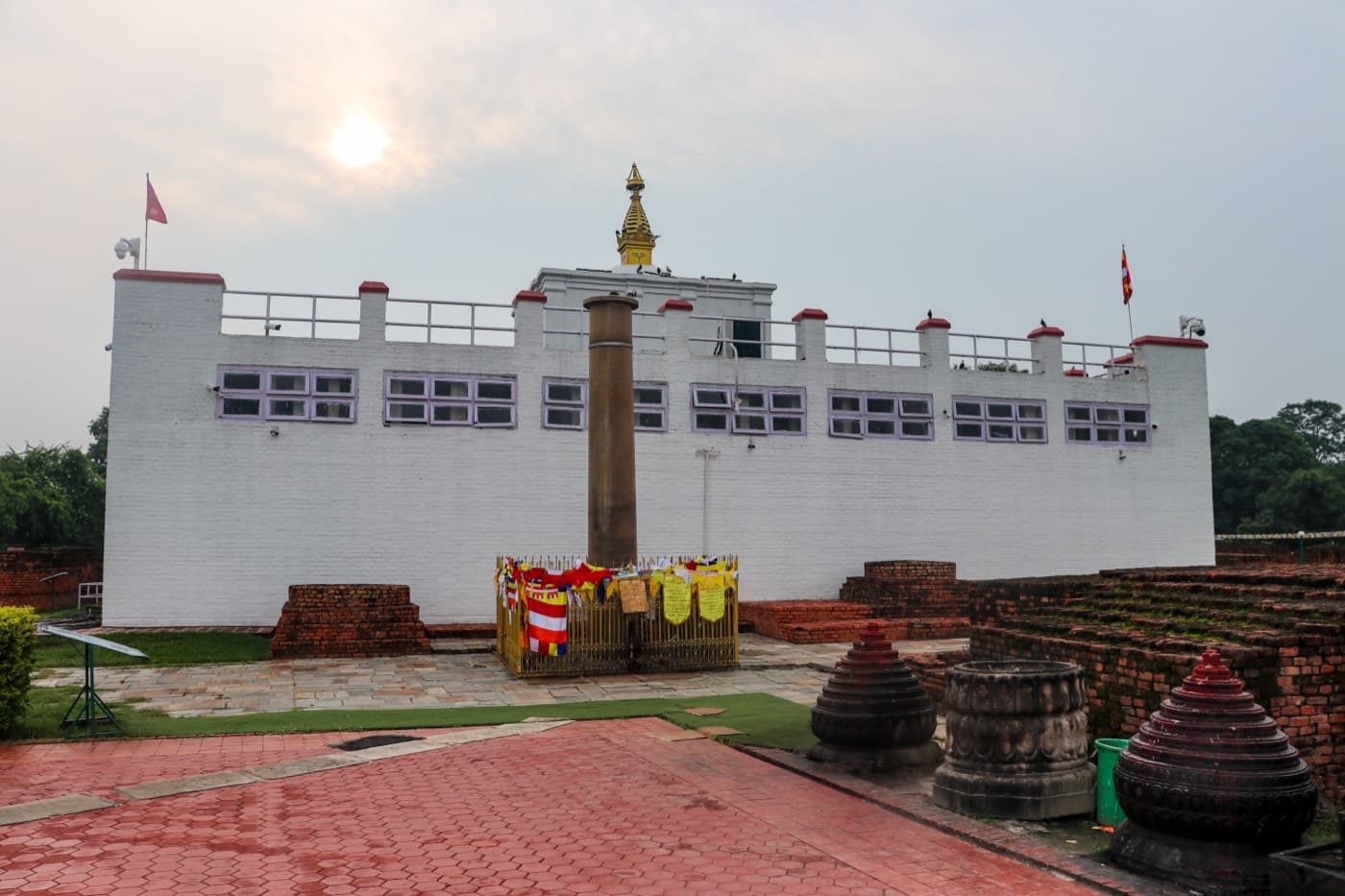
Lumbini, in Nepal's flat Terai region near the Indian border, is where Siddhartha Gautama — the future Buddha — was born around the 6th century BCE, according to Buddhist tradition. It's one of Buddhism's four holiest sites (alongside Bodh Gaya, Sarnath and Kushinagar, all in India — see the Buddhist Pilgrimage Circuit on our India guide), and unlike some ancient pilgrimage sites, Lumbini's location isn't disputed: a 3rd-century BCE pillar erected by Emperor Ashoka, still standing at the site, is inscribed confirming this as the Buddha's birthplace.
Quick facts
The sacred garden and Maya Devi Temple
The core site is the Sacred Garden, centered on the Maya Devi Temple, which protects the archaeological remains believed to mark the exact spot of the birth — including a marker stone visible through a glass floor inside. The Ashoka Pillar stands just outside, and the Puskarini pond nearby is traditionally identified as where Maya Devi bathed before giving birth.
The Monastic Zone — a walk through world Buddhism
Surrounding the Sacred Garden, the planned Monastic Zone (part of architect Kenzo Tange's master plan for the site) is divided into an eastern zone for Theravada monasteries and a western zone for Mahayana and Vajrayana ones — Myanmar, Sri Lanka, Thailand, China, Vietnam, Cambodia, South Korea and others have each built a monastery or temple in their own national architectural style, making a walk through the zone a genuine cross-section of how Buddhism looks across Asia, not just a single-tradition site.
Getting there and visiting
Gautam Buddha International Airport in nearby Bhairahawa (about a 30-minute drive from Lumbini) has frequent domestic flights from Kathmandu — around 8–11 a day combined across Buddha Air, Yeti Airlines and Shree Airlines, roughly 35 minutes in the air. The airport has been adding international routes gradually since opening as an international-capable facility, though scheduled international service is still limited as of 2026 — most international pilgrims still connect via Kathmandu. Overland from Kathmandu is a long day (7–8 hours by road); a short flight is the realistic option for most visitors.
Practical tips
- —Half a day covers the Sacred Garden and Maya Devi Temple comfortably; add a couple more hours to walk the Monastic Zone if the different national temple styles interest you.
- —October–March is the most comfortable season — the Terai plains get genuinely hot and humid April–June, and the monsoon (roughly June–September) brings heavy rain.
- —If your trip can align with it, Buddha Jayanti (Buddha's birthday, a lunar-calendar date usually falling in April or May) is when Lumbini is at its most alive, with pilgrims and ceremonies from across the Buddhist world — outside that window the site is peaceful and uncrowded rather than festive.
- —Combine Lumbini with a broader Nepal itinerary rather than a standalone trip — most visitors add it as a 1–2 day extension to Kathmandu or Pokhara plans rather than flying in just for the site.